

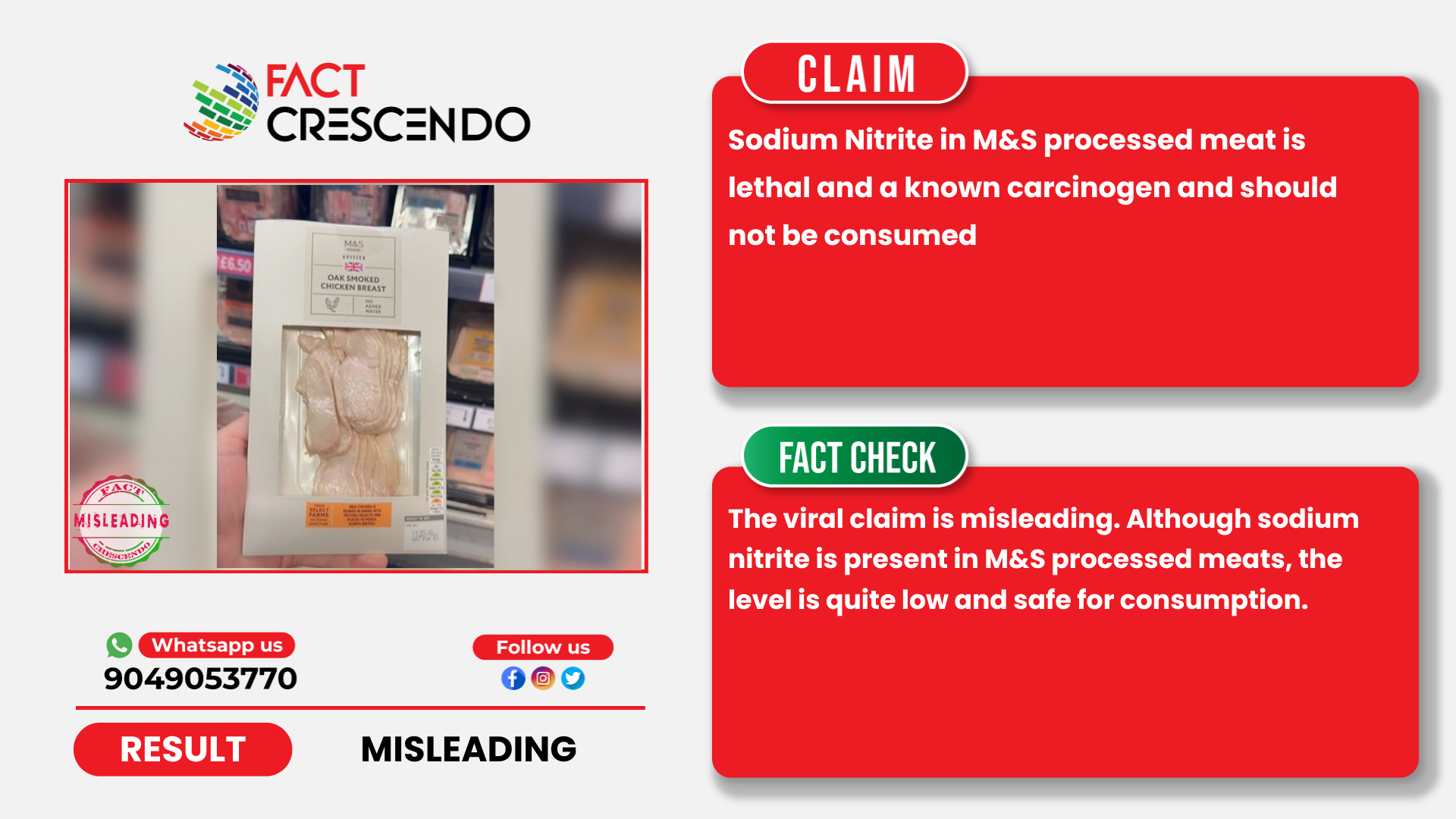
Social media users have raised concern over the use of the harmful chemical sodium nitrite in M&S processed meats. The claim suggests that sodium nitrite used in M&S processed meat like smoked chicken etc. have been found to be lethal and a major cause of cancer.
However, Fact Crescendo found the claim to be misleading. The amount of sodium nitrite used in M&S processed meat is well within the established limits which is considered to be safe upon consumption.
Fact Check-
What is Sodium Nitrite?
Sodium nitrite is a chemical commonly added to the processed meats like bacon, sausages, hot dogs, ham, and deli meats for preserving the products, preventing bacterial growth, extending shelf life and giving cured meats their pink or red color. Without these additives, processed meats would look gray and spoil faster.
According to the Environmental Working Group, sodium nitrite poses a threat to human health because it forms compounds called nitrosamines which are linked to cancer. High consumption of processed meats containing sodium nitrate may also lead to heart disease, high blood pressure, and some neurological and reproductive problems.
Various researches have also found that sodium nitrite can be highly lethal if consumed in large amounts. It converts normal hemoglobin in the blood into methemoglobin, which cannot carry oxygen. This causes severe oxygen shortage in the body (hypoxia), leading to symptoms such as dizziness, blue skin, breathing difficulty, low blood pressure, organ failure, and possibly death.
According to the study, the estimated lethal dose for humans is around 2.6 grams, although deaths have occurred even with 1 gram.
Food-grade sodium nitrite is used to cure meat as it helps in preventing the growth of dangerous bacteria Clostridium botulinum and keeps meat pink in color. However, the amount allowed in food is extremely small and closely regulated. The European regulations approved a maximum of 150 mg per kilogram of meat products, which is considered safe for normal consumption. The Acceptable Daily Intake (ADI) value established for sodium nitrite is around 0.4 mg per kilogram of body weight, which is considered as low level.
Is the presence of Sodium Nitrite in food safe?
According to the National Institute of Health, sodium nitrite can react with meats to form nitroso compounds during high-temperature cooking or while processing the meat. Many of these nitrosamines are classified as potentially carcinogenic. The International Agency for Research on Cancer (IARC) has stated that nitrite under conditions that lead to the formation of nitroso compounds is considered carcinogenic to humans.
Exposure to nitrites at high levels converts hemoglobin to methemoglobin, reducing the blood’s ability to carry oxygen and potentially leading to hypoxia, particularly in infants. Excessive nitrite intake may also interfere with iodine metabolism.
However, sodium nitrite is considered safe when used at low levels in food products. Low levels of nitrites in food maintains a balance between its preservative property and the risk of harmful by-products.
The FDA had also approved the use of sodium nitrite as antimicrobial agent, antioxidant, color or coloring adjunct, flavor enhancer etc.
According to the European Food Safety Authority, sodium nitrite is considered safe in foods when used within regulated limits. The review did not find any clear evidence that it damages DNA or causes cancer at approved levels. In 2017, the EFSA established an acceptable daily intake of 0.07 mg per kilogram of body weight per day for nitrites.
Conclusion:
Fact Crescendo found the claim to be misleading. The amount of sodium nitrite used in M&S processed meat is well within the established limits, which is considered to be safe upon consumption.
Title: Is the level of Sodium Nitrite in M&S processed meat lethal and carcinogenic? Know the truth.
Fact Check By: Siddharth Sahu
Result: Misleading
