

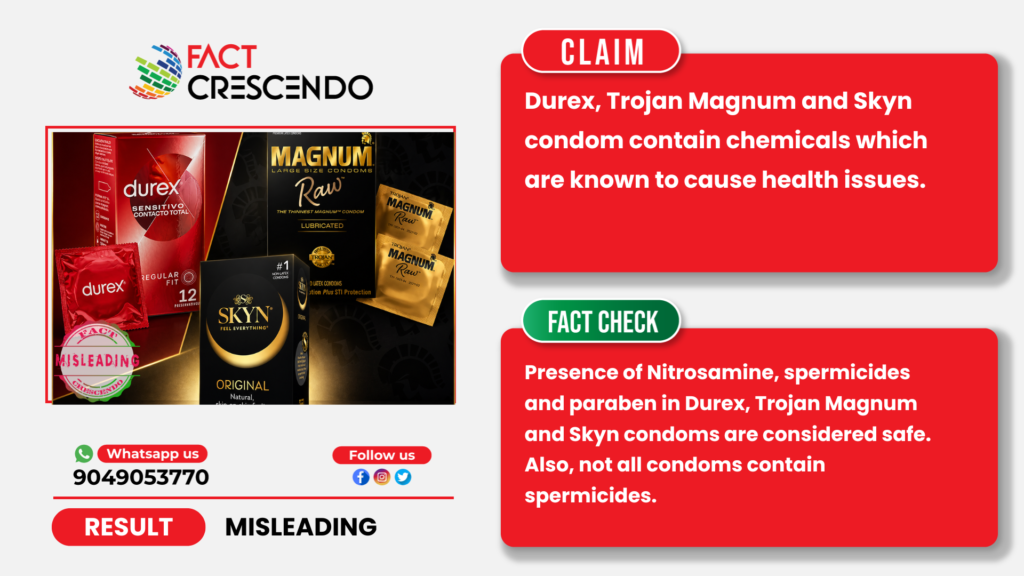
Several social media posts are alleging that popular condom brands such as Durex, Trojan Magnum, and SKYN contain harmful chemicals that may pose serious health risks. The claims suggest that Durex condoms contain nitrosamines, Trojan Magnum condoms use spermicidal chemicals and SKYN condoms include parabens which are considered as toxic.
Fact Check-
Durex contains Nitrosamine:
Scientists have found that very tiny amounts of nitrosamine chemicals can move from condoms to the body during the use. The amount that gets passed on to the body is extremely small. Over a person’s lifetime, even with regular condom use, the total exposure is still millions of times lower than the levels that caused cancer in animal studies. On the other hand, people are exposed to much higher amounts of this chemical from everyday sources like food and tobacco. Studies did not show any link between condom use and cancer.
Overall, the study concludes that the risk of getting cancer from nitrosamines in condoms is very low and not a significant concern.
The Scientific Committee on Consumer Products (SCCP) explained that nitrosamines are a group of chemicals that can sometimes form in consumer products like cosmetics, rubber items, and toys. Based on animal studies, many of them are suspected to cause cancer. Strict limits are set for how much of these substances can be present in products.
However, the report emphasizes that safety depends on the level of exposure of these substances. Very small amounts can be considered acceptable as they pose negligible risk to human health. If nitrosamine levels exceed the limits, then products are considered unsafe, but when levels are below or only slightly above limits, the actual health risk may still be minimal.
It can be concluded that nitrosamines have carcinogenic potential but low exposures in consumer products like condoms are generally considered safe.
Trojan Magnum contains Spermicides:
Spermicides are a type of birth control that work by damaging sperm to stop them from reaching an egg. They come in many forms, like gels, creams, foams and suppositories. Most spermicides contain a chemical called nonoxynol-9 (N-9). It stops sperm from moving. This is generally considered safe.
According to the CDC, Nonoxynol-9 (N-9) is used in many condoms and contraceptive products. Previously, many women were given spermicide coated condoms as part of contraceptive programs. However, by the early 2000s, new medical studies showed that although Nonoxynol-9 can kill sperm, it does not protect people from HIV or other sexually transmitted infections. It was also found that frequent use of Nonoxynol-9 may irritate or damage the vaginal and genital tissues. Researchers found that repeated exposure of this could create tiny sores or inflammation in intimate skin and this irritation may make it easier for viruses like HIV to enter the body during sex.
Because of this, the CDC said that spermicidal condoms were not more effective than regular lubricated condoms for disease prevention and that there was no strong health advantage to continuing buying them in the future. The agency noted that the small amount of spermicide on condoms is still better than using no condom at all for pregnancy and STI prevention.
It is worth noticing that not all Trojan condom products contain spermicides. Spermicide condoms are specially labelled as per FDA’s guidelines. FDA classified spermicide condoms as Class II medical devices. This means, it can be sold only if it meets FDA performance, safety, and labeling standards.
Skyn Condoms contain Parabens:
In 2024, The Guardian reported that some popular condoms and lubricants were found to contain PFAS, which are toxic “forever chemicals.” PFAS are man-made chemicals used to make products slippery, water-resistant, or non-stick. The problem with these chemicals is that they do not break down easily and can stay in the human body for many years. Scientists have linked long-term PFAS exposure to health concerns such as hormone disruption, lower fertility, thyroid problems, liver issues, weakened immunity, and even certain cancers.
Skyn condoms clarified that their products do not contain Nonoxynol-9 and all its products follow the safety rules required by the government authorities before they are sold in the market. The products also comply with medical device regulations and chemical safety standards in different regions. It selects suppliers using strict internal standards and regularly checks and audits them to make sure the materials continue to meet its safety expectations.
Apart from this, studies and reviews have shown that parabens have low toxicity and do not cause cancer when used within the safety limits established by regulatory authorities. However, concerns remain about their potential hormone-like activity, particularly in young children. While current regulations consider parabens safe for use, ongoing research aims to address uncertainties and ensure their safe use.
Conclusion:
Fact Crescendo found the claim to be misleading. Presence of Nitrosamine, spermicides and paraben in Durex, Trojan Magnum and Syn condoms are considered safe. Also, not all condoms contain spermicides.
Title: Are Durex, Trojan Magnum, and SKYN Condoms Unsafe Due to Nitrosamines, Spermicides, and Parabens?
Fact Check By: Siddharth Sahu
Result: Misleading
