

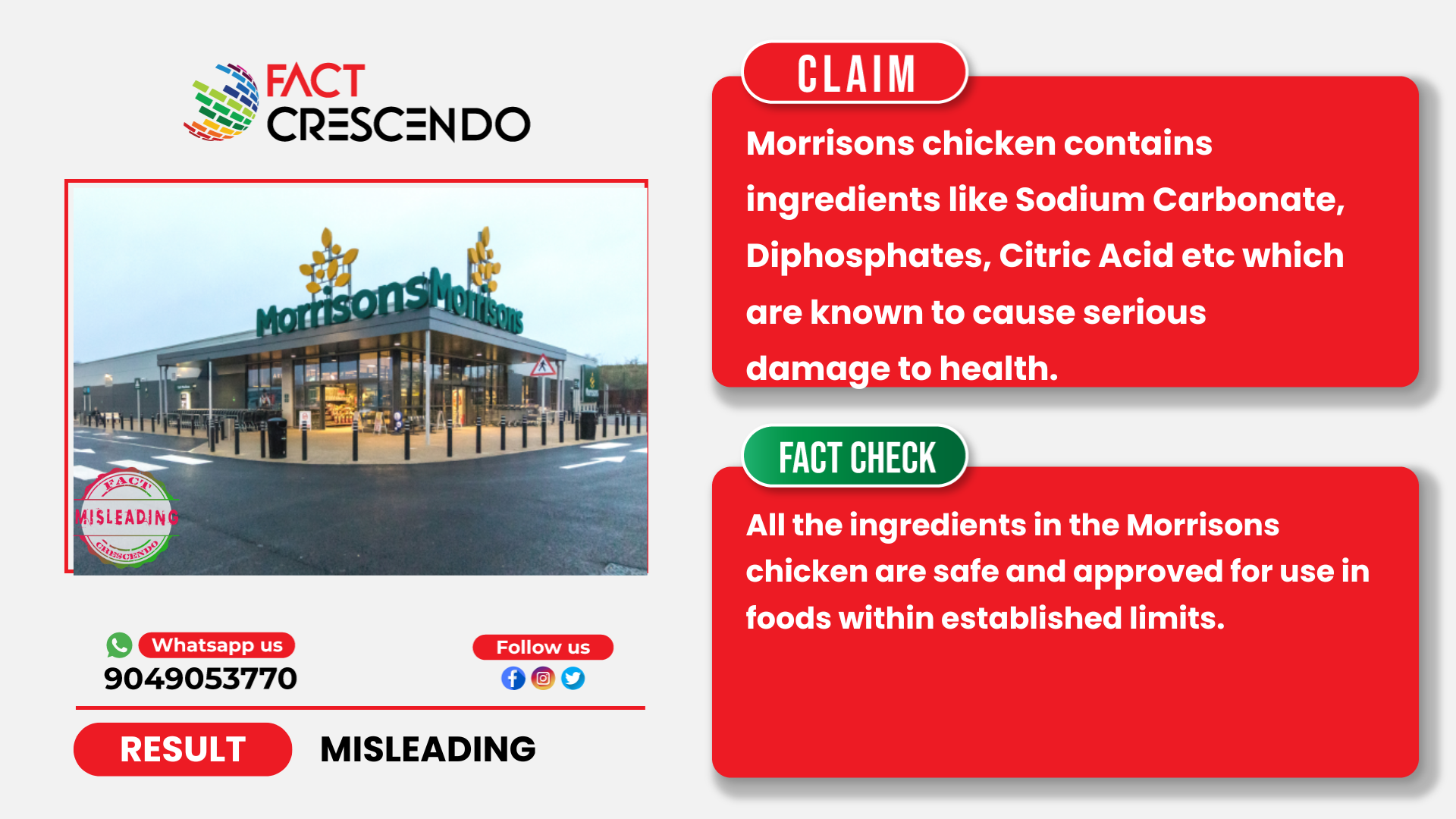
Social media users have raised concerns about the ingredients used in Morrisons Chicken products. The claim suggests that Morrisons chicken uses Sodium Carbonate, Diphosphates, Citric Acid etc as ingredients which are known to cause serious health issues.
However, Fact Crescendo found the claim to be misleading. The ingredients mentioned in the viral video are safe when consumed within the established limits.
Fact Check-
Let’s check the facts about the safety of the ingredients mentioned in the viral video.
Sodium Carbonate: According to the FDA, Calcium Carbonate is safe when used in foods according to regulations. It is used in foods to prevent clumping of powdered products, improve texture, control acidity, baking etc. The FDA lists specific rules for how and where calcium carbonate can be used, ensuring it is safe when added to food within approved limits.
In supplements, a maximum dose of 8 to 10 g per day of calcium carbonate can be administered for short-term use as suggested by the FDA. But, long-term use of over 2 grams can lead to adverse effects such as hypercalcemia, renal calculi, hypophosphatemia, and nephrotoxicity, especially in individuals with chronic kidney disease.
Citric Acid: Citric acid (C₆H₈O₇) is a naturally occurring compound found in plants and animals. It appears as a colorless crystal or white powder. It can be obtained from natural sources like lemon or pineapple juice, or produced through fermentation using specific fungi such as Candida or Aspergillus niger. The citric acid used in food must meet the quality and purity standards set by the Food Chemicals Codex. It is approved for use in food without any restrictions if prepared under good manufacturing practices guidelines.
Citric Acid (E330) is also listed under approved additives by Food Safety Standards in the UK.
Calcium Carbonate: Calcium carbonate is a widely used ingredient in foods, medicines, and supplements, including multivitamins and calcium pills. It is a form of calcium that your body can use to help keep bones strong and support other functions. In the United States, the FDA considers calcium carbonate safe as a food additive and supplement ingredient. A maximum dose of 8 to 10 g per day of calcium carbonate can be administered for short-term use as suggested by the FDA. But, long-term use of over 2 grams can lead to adverse effects such as hypercalcemia, renal calculi, hypophosphatemia, and nephrotoxicity, especially in individuals with chronic kidney disease.
However, taking very large amounts for a long time can cause side effects such as high calcium levels, kidney stones, or digestive issues. Doctors usually recommend taking it with food to help the body absorb it better. People with certain health problems, like kidney disease, should be careful and talk to a doctor before using it.
Diphosphates: According to the EFSA, phosphates including diphosphate E450 are approved food additives in the EU. These are considered safe as no carcinogenicity, genotoxicity or harmful effects for development were found during the study. Around 80% to 90% of the additive is well absorbed by the body and rest are removed by the kidney. EFSA has set an Acceptable Daily Intake (ADI) value of 40mg per kg body weight per day.
But the concern remains that few people may exceed this safe limit through diet only. Food supplements with phosphates can increase the intake value even more. It was also found that excessive intake of this additive can have a negative impact on the kidney.
Studies have shown low acute toxicity of diphosphates, which means it does not cause harm in small amounts.Even during animal studies no serious effects were noticed at moderate doses. But excessive intake over time may put stress on the kidney and also result in the high phosphate level in the blood.
Conclusion:
Fact Crescendo found the claim to be misleading. All the ingredients in the Morrisons chicken are safe and approved for use in foods within established limits.
Title: Morrisons Chicken Does Not Contain Harmful Ingredients. Viral Claim Is Misleading
Fact Check By: Siddharth Sahu
Result: Misleading
