

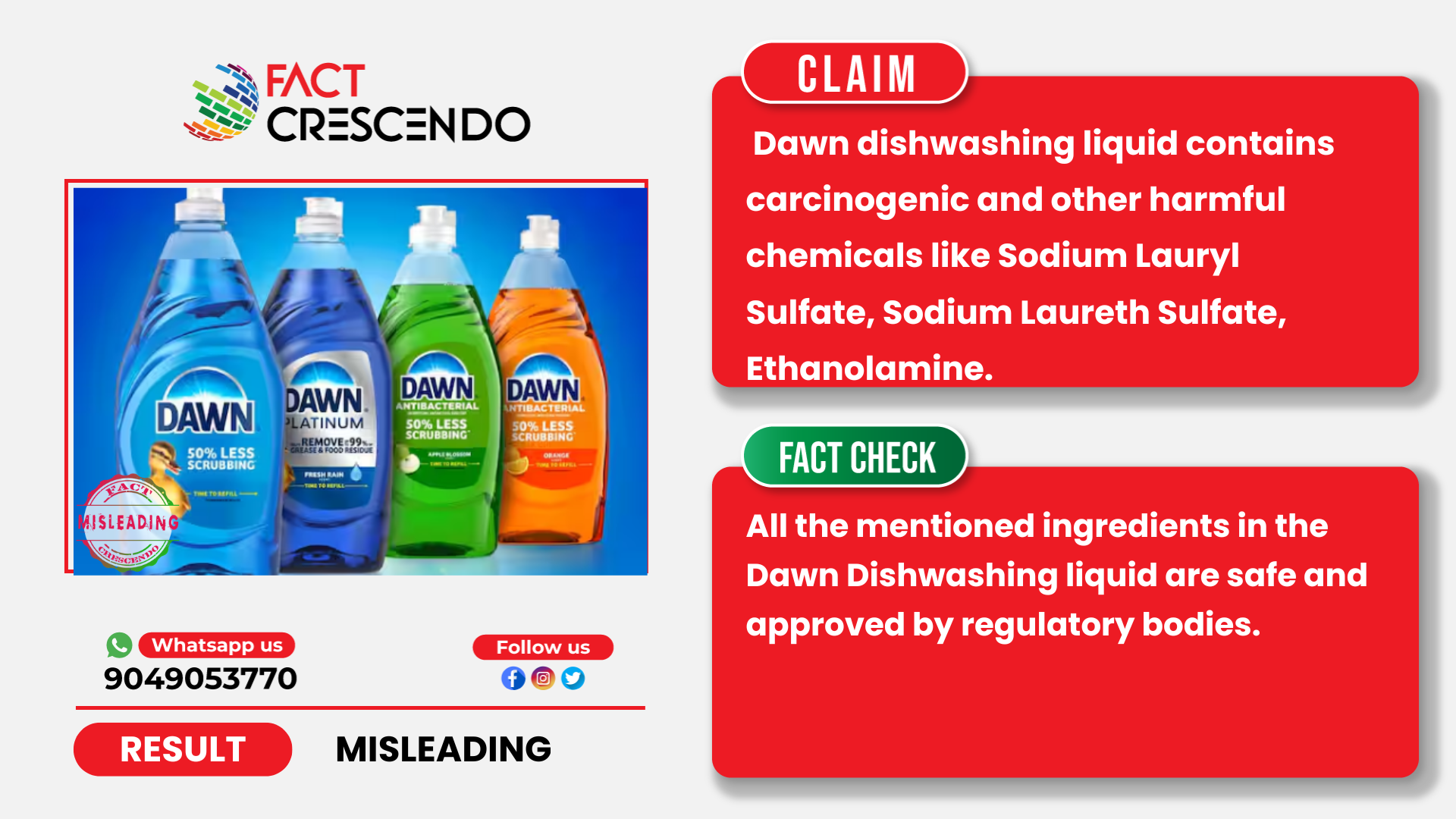
Dawn Dishwashing Liquid is one of the most widely used dishwashing detergents known for its strong grease-cutting ability and everyday household use. It is manufactured by Procter & Gamble.
Recently, social media users were found raising questions about the safety of the product because of the presence of chemicals like Sodium Lauryl Sulfate, Sodium Laureth Sulfate, Ethanolamine. The claim suggests that these chemicals are carcinogenic and leads to other serious health issues.
Fact Check-
Let’s check the facts about the safety of Sodium Lauryl Sulfate, Sodium Laureth Sulfate, Methylisothiazolinone, and Ethanolamine.
Sodium lauryl Sulfate:
A blog mentioned that many dishwasher liquids contain sodium lauryl sulfate (SLS), which is considered as a powerful cleaning agent that can irritate skin and eyes, leave residue on dishes, and even become airborne which affect our health or trigger allergies. After it washes away, SLS ends up in rivers and lakes, where it can harm fish and disrupt ecosystems. The blog recommended switching to natural, SLS-free dishwasher powders or making own version of safer detergent using baking soda, washing soda, citric acid, and salt to protect both your family and the environment
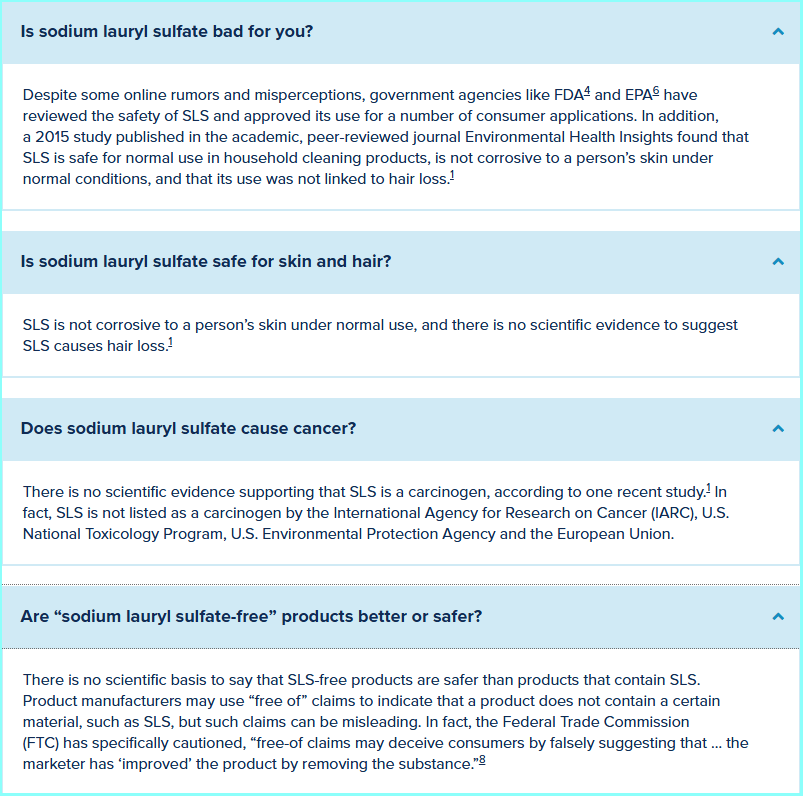
The U.S. Environmental Protection Agency (EPA) released a fact sheet which shows that it reviewed lauryl sulfate salts (such as sodium and ammonium lauryl sulfate) as part of its pesticide re‑registration process in the early 1990s. The EPA determined that these substances possess a low risk to human health and the environment when used as directed. The organization had concluded that existing safety measures and regulations were sufficient and no additional restrictions were needed.
According to another report, the FDA had approved Sodium Lauryl Sulfate as a good additive both directly and indirectly (food packaging and coating). The expert panel reviewed the safety in 1983 and 2002 and found it safe in products that are quickly rinsed off the skin. However, if a product stays on the skin for a long time, SLS should be used in very small amounts, no more than 1%.
Here you can read FAQs related to Sodium Lauryl Sulfate (SLS).
Sodium Laureth Sulfate:
Sodium Laureth Sulfate (SLES) is considered safe for use in home care products when used within recommended concentrations and is biodegradable. The recommended concentration of SLES in dishwashing liquid formulations is typically between 10% and 20%. This range ensures optimal cleaning performance while maintaining product safety and stability. It can cause skin dryness or irritation to those who have sensitive skin and use the product over a long time. Accidental ingestion of trace amounts of SLES from residual soap on dishes is highly unlikely to cause any harm.
Many scientific studies have looked into the safety of SLES (Sodium Laureth Sulfate) and SLS (Sodium Lauryl Sulfate). The claims that they cause cancer are not supported by evidence, and major health organizations like the WHO and EU do not list them as carcinogens. Reviews by the U.S. Cosmetic Ingredient Review panel found them safe to use in cosmetics and personal care products.
Methylisothiazolinone:
According to the Department of Health, Disability and Ageing, Australia – Methylisothiazolinone has the potential to cause skin allergies and has been labelled as a medium-hazard substance. But this issue can be handled with proper packaging and labelling, cautioning the consumers.
Although Methylisothiazolinone in high quantities can cause allergies, in low quantities it is declared as safe. After reviewing the products with Methylisothiazolinone, the Australian government had permitted 0.0015% (15ppm) and 0.1% (1000ppm ) of the ingredient to be used in rinse-off cosmetics and other non-skin contact products respectively.
C 10-16 Alkyldimethylamine Oxide:
C10–16 Alkyldimethylamine Oxide (ADAO) is an antimicrobial surfactant approved by the U.S. Environmental Protection Agency for use in dishwashing liquid and other similar products. It is considered safe when used as directed. According to EPA assessments, exposure to this chemical at higher concentration can lead to irritation in skin and eyes. The main way people come into contact with it is through the skin during use but no major risks were found.
Ethanolamine:
Ethanolamine (MEA) is a common ingredient in floor and tile cleaners and laundry liquid to help remove dirt, grease, and stains. It also helps in removing contaminants from gasoline. MEA acts as a plasticizing agent, and chemical manufacturing plants may use MEA to remove carbon dioxide from ammonia gas in the production of synthetic ammonia.
The Cosmetic Ingredient Review has found that ethanolamine ingredients are safe as currently used in cosmetics and personal care products. FDA includes TEA, DEA and ethanolamine on its list of allowed indirect food additives. CIR’s expert scientific panel has evaluated the safety of ethanolamine used in personal care products and cosmetics. In its review, CIR has found that ethanolamine ingredients are safe as currently used in those products.
The U.S. Food and Drug Administration (FDA) also included ethanolamine on its list of allowed indirect food additives. These ingredients may be used in adhesives in contact with food and to assist in the washing or peeling of fruits and vegetables.
Conclusion:
Fact Crescendo found the claim to be misleading. Chemicals like Sodium Lauryl Sulfate, Sodium Laureth Sulfate, Ethanolamine in Dawn dishwashing liquid are safe and approved by regulatory bodies.
Title: Misinformation about the safety of ingredients used in Dawn dishwashing liquid.
Fact Check By: Siddharth Sahu
Result: Misleading
