

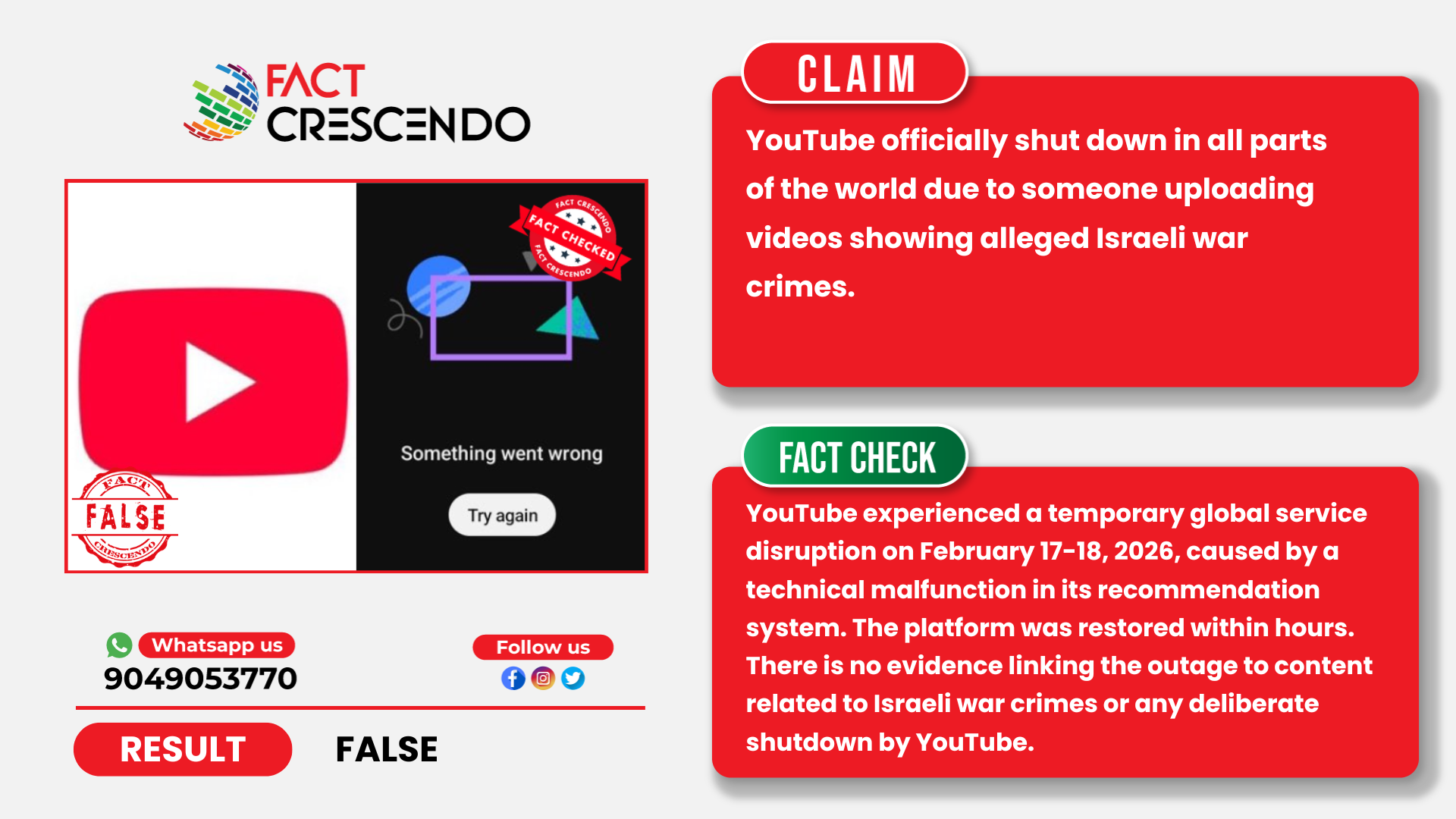
A claim circulating on social media platforms asserts that YouTube has “officially shut down in all parts of the world” as a direct result of someone uploading videos showing alleged Israeli war crimes. Our investigation shows that this assertion is false. YouTube did not permanently shut down anywhere in the world due to content related to war crimes.
Social Media Posts
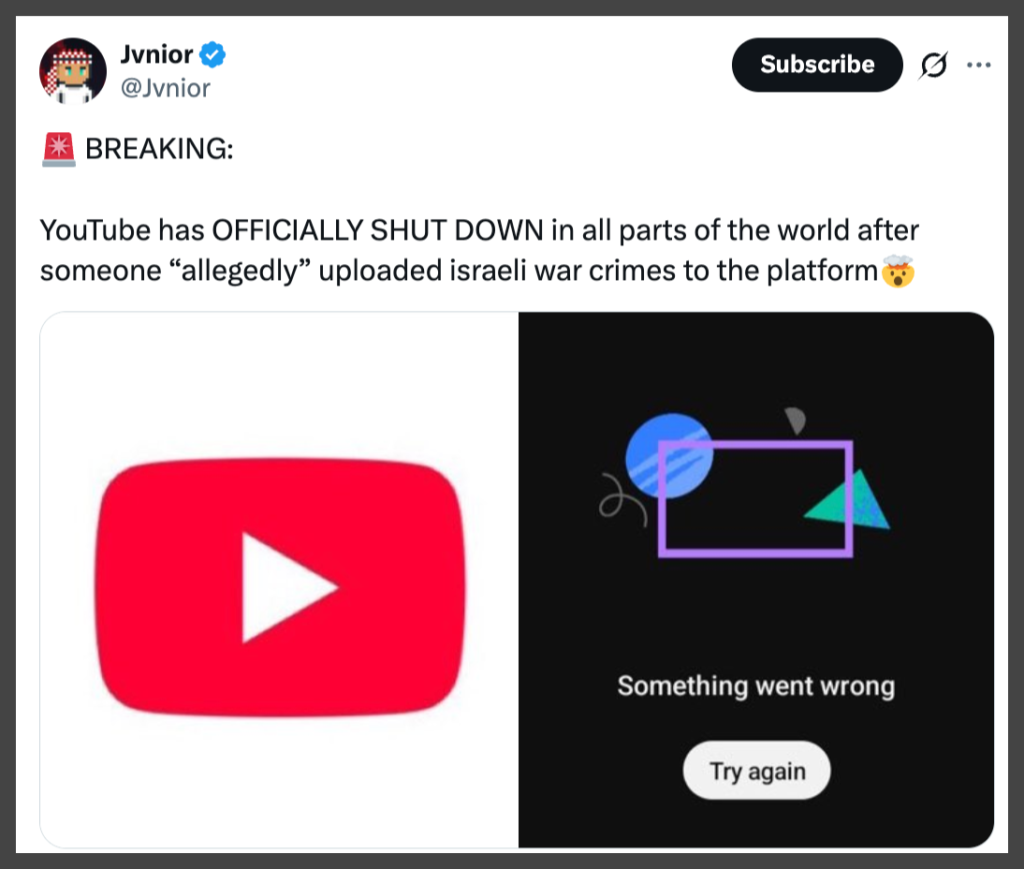
Multiple posts on X allege that the YouTube outage on February 17-18 was linked to Israeli war crimes, causing an official global shutdown.
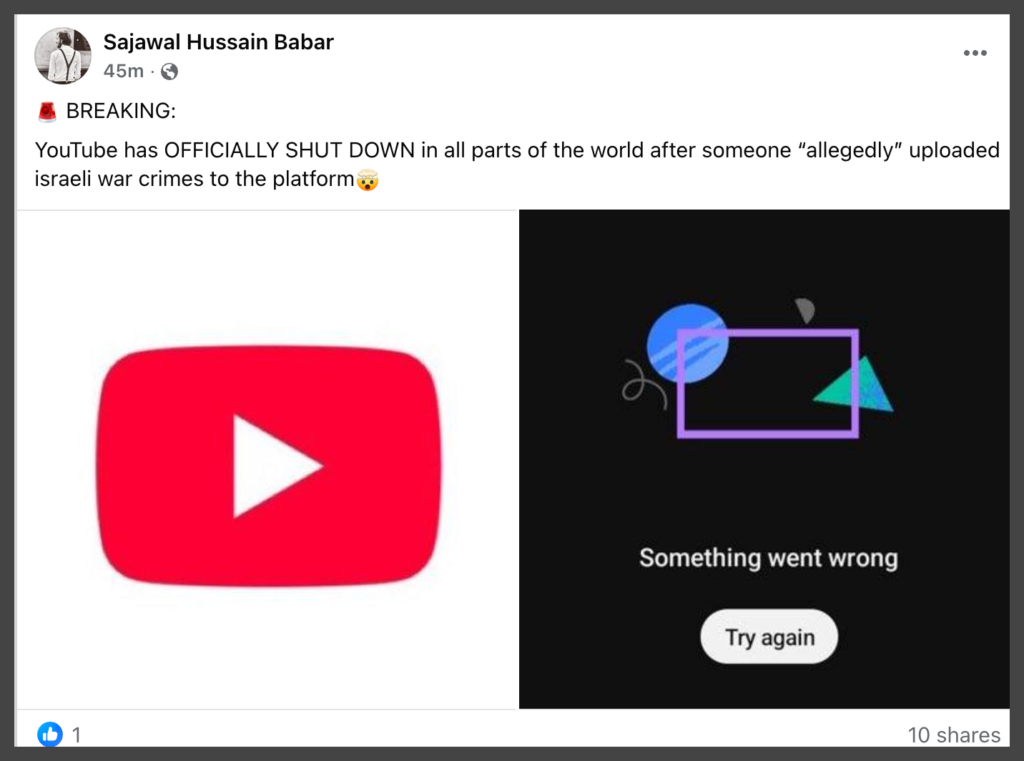
The same claim has also spread on Facebook.
Fact Check
What Actually Happened: YouTube’s February 2026 Outage
On February 17-18, 2026, YouTube experienced a significant global service disruption that affected video loading, recommendations, and access to multiple YouTube products. User reports on outage monitoring sites such as Downdetector surged into the hundreds of thousands, with more than 320,000 reports in the United States alone, while users in India, the United Kingdom, Australia, and Mexico also reported errors and failures to load video content. Users commonly saw blank screens or the error note “Something went wrong” when attempting to use YouTube, the YouTube app, YouTube Music, YouTube Kids, and YouTube TV. This incident was widely discussed across global tech news outlets as a major outage event, not a shutdown. (Source)
Global reporting from TechRadar confirmed that the issue affected millions of users worldwide; it was a single incident of temporary service interruption rather than any official announcement of a platform closure.
Downdetector data showed a sharp spike beginning around 8 PM Eastern Time, peaking within roughly an hour, and gradually declining as services were restored.
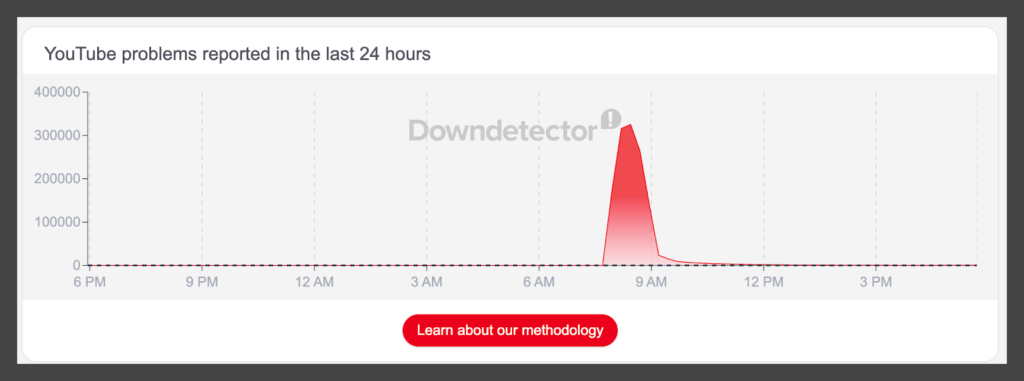
Then, by 10:45 PM EST, reports showed that U.S. users reporting issues with YouTube to Downdetector had dropped below 5,000, and at 11:04 PM EST, Google confirmed that the issue was related to the “recommendations system” and that it had been resolved. (Source)
Outage monitoring platforms track user-reported errors rather than official shutdowns. A surge in reports typically indicates technical issues with the service. Services were restored within hours, and normal functionality resumed globally. There were no continued interruptions beyond the evening of February 18.
Official Explanation
After the outage began, YouTube’s engineering teams publicly acknowledged the issue. According to reports from multiple outlets covering Google and TeamYouTube communications, the problem stemmed from a malfunction in YouTube’s recommendations system, the technology that generates personalized video suggestions and home feeds for users. When this system failed, it prevented essential parts of the YouTube interface from loading properly, leaving many users unable to access the platform normally.
The company communicated through its official support channels that the homepage was restored first followed by a full fix later in the evening, and an update confirmed that all YouTube services were back to normal across platforms including YouTube.com, app, YouTube Music, Kids, and TV, thereby ending the outage within a few hours.
(Source: News.AZ, PhoneArena)
Outage Pattern: Similar Technical Failures Have Happened Before
YouTube has a documented history of temporary outages caused by backend problems. A major outage occurred on October 15, 2025, when video playback errors were reported across multiple countries, affecting hundreds of thousands of users. Earlier in 2025, similar outages also impacted YouTube and other Google services due to server and infrastructure faults. (Source)
The February 2026 disruption follows this pattern: significant user reports, a central system malfunction, and restoration within hours. None of these features align with a corporate decision to shut down operations in response to specific content.
There is no evidence from official Google or YouTube announcements, regulatory authorities, or major international news agencies that the outage was caused by uploads related to alleged Israeli war crimes. Outlets that covered the disruption reported it was technical in nature, stemming from a malfunction in the platform’s recommendation algorithms. A deliberate global suspension in response to political content would likely have generated extensive coverage by major international media outlets, which was not observed.
Removal of Palestinian Human Rights Content
While the global shutdown claim is false, YouTube has previously addressed criticism regarding its handling of Israel-Palestine related content, though primarily in legal and policy terms rather than engaging directly with broader accusations of censorship.
In October and November 2025, multiple outlets reported that YouTube removed more than 700 videos and terminated the official channels of three Palestinian human rights organizations: Al-Haq, Al Mezan Center for Human Rights, and the Palestinian Centre for Human Rights. These videos documented alleged Israeli human rights violations and war crimes in Gaza and the West Bank. (Source)
Additional reporting by The New Arab and International Business Times cited Google spokespeople confirming that the removals were carried out to comply with U.S. sanctions and trade laws targeting the organizations involved.
A Google spokesperson stating that the company is “committed to compliance with applicable sanctions and trade compliance laws,” framing the deletions as a legal obligation rather than a content-based editorial decision. In at least one instance, YouTube also referenced violations of its Community Guidelines when notifying affected organizations, without publicly detailing which specific provisions were breached.
However, YouTube has not issued a comprehensive public statement addressing allegations of bias, censorship, or the erasure of documentation of alleged Israeli abuses. Criticism on those grounds has primarily come from digital rights organizations and civil society groups.
The Business & Human Rights Resource Centre summarized concerns raised by Palestinian digital rights group 7amleh, which argued that YouTube’s policies disproportionately restricted Palestinian content while permitting other politically sensitive material.
Policy analysis by Al-Shabaka described YouTube’s enforcement practices as vague and overbroad, arguing that sanctions compliance has resulted in the removal of human rights documentation without sufficient transparency or due process.
Human rights advocates have stated that removing archival footage documenting alleged war crimes could undermine accountability and historical record preservation.
The documented content moderation controversies described above occurred separately from the February 2026 outage. The removals took place months earlier and were attributed to sanctions compliance reviews. There is no available evidence linking the temporary technical disruption in February to new uploads or enforcement actions related to Israel-Palestine content.
Conclusion
The claim that YouTube “officially shut down in all parts of the world” due to videos showing alleged Israeli war crimes is false. The February 2026 outage was a temporary technical issue caused by a malfunction in YouTube’s recommendation system, not a deliberate shutdown in response to specific content. While YouTube has removed content related to Palestinian human rights organizations due to U.S. sanctions compliance, this is unrelated to the recent outage and does not constitute a global platform closure.
Title:YouTube Did Not Shut Down Globally Due to Israeli War Crimes Video
Fact Check By: Cielito WangResult: False
