

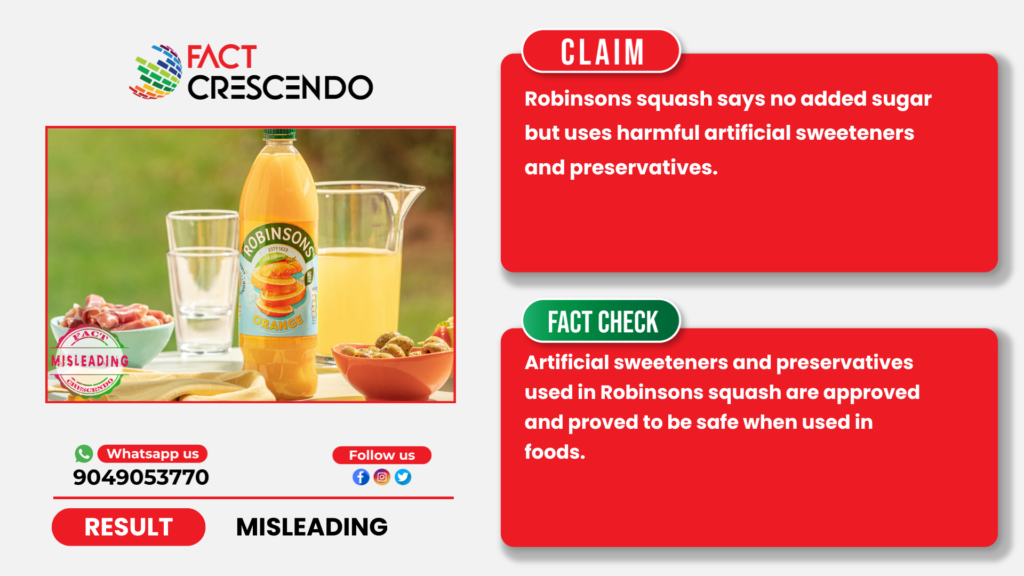
Robinsons squash is a concentrated fruit drink known for its refreshing taste and wide range of flavours. It was first introduced in 1823 by the Robinson family in England. It has no added sugars, artificial colors and flavorings.
Recently, users on social media are claiming that although the drink does not contain sugar or artificial colors, it contains many artificial sweeteners and other additives that are known to cause serious health issues upon consumption.
However, Fact Crescendo found the claim to be misleading. All the ingredients, including artificial sweeteners in Robinsons squash are approved and safe to use.
What’s the claim?
The claim states, “If you think these no added sugar squash are healthy, think again. These squash are ultra processed and artificially sweetened. The artificial sweeteners in these drinks disrupt gut health, confuse the metabolism and fuel the sugar cravings. It increases fat storage and messes with insulin sensitivity. Preservatives like sodium metabisulfite can trigger your allergies, headaches and gut issues. They also contain acidity regulators which can erode your tooth enamel.”
Fact Check-
First, we checked the ingredients used in the Robinsons squash. We found that the product contains water, orange fruit from concentrate (10%), citric acid, sodium citrate, natural orange flavouring with other natural flavourings, preservatives (potassium sorbate, sodium metabisulphite), sweeteners (acesulfame k, sucralose), stabilisers (cellulose gum, sucrose acetate isobutyrate), emulsifier (glycerol esters of wood rosins), and natural colour (carotenes).
As mentioned in the viral claim, Robinsons contain acesulfame k and sucralose as sweeteners and sodium metabisulphite as preservative.
Let’s check the safety of these three ingredients.
Acesulfame K: Acesulfame potassium, also known as Ace-K or E950 has been approved by FDA for use in food as a sweetener. The FDA approved acesulfame potassium (Ace-K) as a food additive in 1988 for certain foods and beverages, and in 2003, it was approved as a general sweetener and flavor enhancer. To ensure its safety, the FDA reviewed over 90 studies that looked at potential toxic effects, including its impact on reproduction, cancer risk, and metabolism.
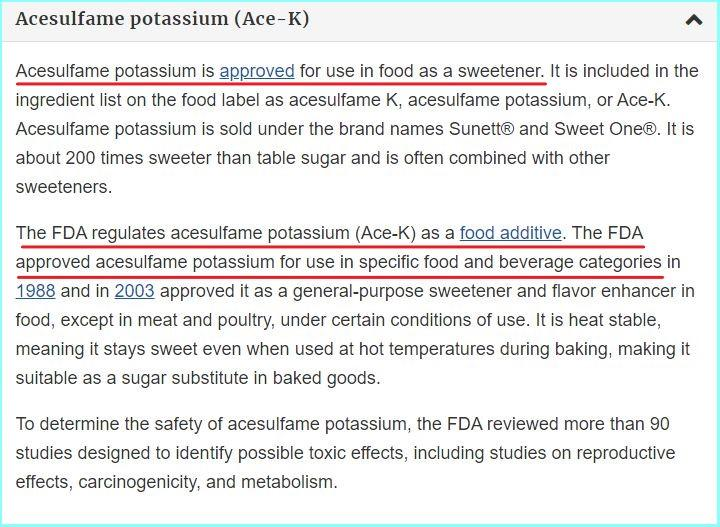
According to another report, the FDA and National Cancer Institute (NCI) had confirmed that Ace-K is safe and that there is enough evidence to say that it does not cause cancer. In 2005, the National Toxicology Program conducted a large animal study where they gave mice acesulfame potassium, making up 3% of their diet, for over 40 weeks. This is roughly equal to a person consuming more than 1,000 cans of soft drinks daily. The study found no evidence of an increased risk of cancer in the mice.
Sucralose: Some studies show that sucralose can affect your gut by reducing good bacteria by half. Research on animals also suggests that it may cause inflammation in the body. Too much inflammation over time can lead to health problems like obesity and diabetes.
However, sucralose is approved for use in food as a sweetener. It is sold under the brand name Splenda. The FDA approved sucralose for use in 15 food categories in 1998 and for use as a general-purpose sweetener for foods in 1999, under certain conditions of use. To determine the safety of sucralose, the FDA reviewed more than 110 studies designed to identify possible toxic effects, including studies on the reproductive and nervous systems, carcinogenicity, and metabolism. The FDA also reviewed human clinical trials to address metabolism and effects on patients with diabetes.
Sodium Metabisulphite: According to the U.S. Food and Drug Administration (FDA) regulations, sodium metabisulphite is considered safe to use in food when it is used with good manufacturing practices. It is classified as “Generally Recognized as Safe” (GRAS) in the Code of Federal Regulations.
However, there are clear restrictions on where it can be used. It is not permitted in fresh fruits or vegetables intended to be eaten raw, in meats, or in foods that are a significant source of vitamin B1 (thiamine) because it can affect nutrient content or may lead to some reactions.
The European Food Safety Authority (EFSA) reviewed the safety of Sulphur dioxide and sulphites including Sodium Metabisulphite in 2022. Due to lack of evidence of its toxicity, the panel removed the Acceptable Daily Intake (ADI) value. The Panel determined that the Margin of Exposure (MOE) for dietary exposure to these additives should be at least 80.
When EFSA studied different ways these additives might be used in food, they found that toddlers could have the highest exposure, especially if the additives were used at the maximum allowed levels. But from real data they found that the estimated intake was much lower. Adults mainly get exposure from wine, beer and meat products, children from fruit juices and flavoured drinks.
Conclusion:
Fact Crescendo found the claim to be misleading. Artificial sweeteners and preservatives used in Robinsons squash are approved and proved to be safe when used in foods.
Title:No added sugar Robinsons Squash contains artificial ingredients which are known to cause health issues? Know the facts.
Fact Check By: Siddharth SahuResult: Misleading
