

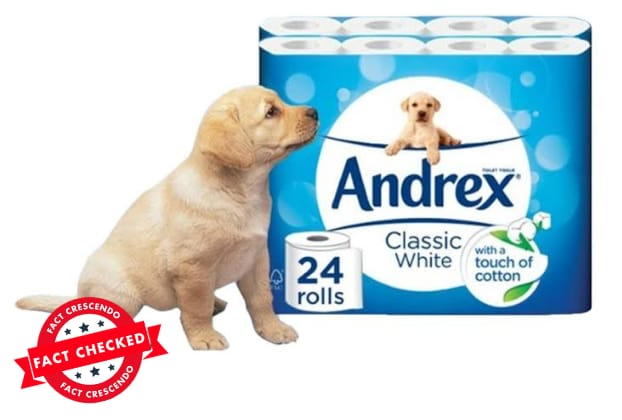
Andrex is one of the most widely used toilet paper brands in Europe, influencing how consumers perceive everyday hygiene products. This visibility also makes the company a common subject of viral claims, including allegations that it uses harsh chemical bleaching processes that result in potential health risks.
In this fact-check, we review a widely shared post that alleges Andrex toilet paper is chemically harmful and environmentally damaging, and we assess those allegations against scientific research, industry standards, and other available evidence.
Social Media Posts
Social media posts claim that Andrex (and other major toilet paper brands) use “harsh chemicals” in bleaching, making them toxic, and promote bamboo alternatives (Naked Paper, Cheeky Panda) as safer. We examine these claims against the evidence using authoritative sources.
Fact Check
Claim 1: Is Andrex toilet paper bleached with harmful chemicals that pose health risks?
Andrex (made by Kimberly-Clark) is typically bleached using Elemental Chlorine Free (ECF) processes. This method uses chlorine dioxide instead of raw chlorine gas, significantly reducing toxic byproducts, such as dioxin (2,3,7,8-TCDD). In other words, replacing chlorine gas with chlorine dioxide eliminates the creation of the worst dioxin (TCDD) during pulping. According to the Ethical Consumer guide, most major brands (including Andrex) use ECF bleaching, which emits far lower levels of harmful substances compared to older chlorine-based methods. Read here
Further, in Andrex’s product description, it clearly says Andrex toilet rolls are totally chlorine-free. Even if minute byproducts exist, they are negligible. A study looked at dioxin levels in bleached paper products (including toilet tissue) and found that the actual dioxin concentrations were orders of magnitude below levels that would pose any cancer risk. It concluded that the trace dioxins found in bleached toilet paper “do not present a significant risk” through skin contact. Read here. Thus, there is no strong scientific evidence showing that this process makes toilet paper dangerous to human health during normal use.
Thus, the claim that Andrex is bleached with “harsh harmful chemicals” is misleading and based on outdated or exaggerated information.
Claim 2: Do Andrex toilet paper products significantly contribute to deforestation by using virgin trees?
It’s true that Andrex is made from virgin wood pulp, and the company says this wood is sustainably sourced. On its site, Andrex states that “all our toilet rolls are manufactured from FSC certified and controlled sources.” FSC certification generally means the forests are managed to strict standards, but it still involves cutting down trees. Industry data also suggest Kimberly-Clark uses a relatively low share of recycled fibre (around 19–30% in recent years), which implies most Andrex tissue comes from newly grown wood rather than recycled material. Read here.
However, the claim is incomplete because some sourcing may be certified (e.g., FSC Mix), and not all production equals illegal or uncontrolled deforestation. Read Andrex’s sustainability journey here
Thus, the Andrex’s deforestation concern is valid, but the claim overgeneralises and ignores sourcing standards.
Claim 3: Do fragranced or “lotioned” Andrex toilet papers contain harmful chemicals?
Some Andrex product lines do add fragrance or lotions (e.g., the “Family Soft Fragrance” and “Ultimate Quilts Aloe Scented” varieties), but Andrex also sells unscented, plain versions like “Complete Clean”. In general, perfumes and aloe in toilet paper are cosmetic. They have been tested for skin safety, and no link to cancer has been found from everyday fragrances. However, fragrance or lotion additives can irritate sensitive skin or trigger allergies. For example, the Asthma & Allergy Foundation notes that toilet paper irritation is usually due to added preservatives or fragrances causing contact dermatitis. Read here
Therefore, if someone has a reaction, it’s often from the scent or resin, not the bleach. To avoid this, consumers can simply use Andrex’s unscented, hypoallergenic products. The mere presence of scented/lotioned options does not make all Andrex paper “toxic”; it just means allergic individuals should pick fragrance-free rolls. Thus, the claim is overstated.
Claim 4: Are Cheeky Panda and Naked Paper toilet papers “less toxic”?
Bamboo-based toilet papers (Naked Paper, Cheeky Panda) are often marketed as “cleaner” or more eco-friendly. Bamboo grows faster than trees and regrows without replanting, which is a sustainability advantage. Read here. Some bamboo brands explicitly avoid chlorine: they advertise “no chlorine bleach” and use hydrogen peroxide or oxygen bleaching instead. In fact, the same risk analysis cited above says even bleached papers are safe for daily use. Read here. Also, even eco-brands may still involve industrial processing and chemicals, and the health benefit of that switch is unproven. Bamboo rolls can be a sustainable choice, but they are not categorically necessary for safety; conventional rolls like Andrex already meet strict safety standards.
Thus, the “eco-brands are less toxic” claim is marketing-driven, not scientifically proven.
Conclusion
The claim that Andrex is made with “harsh toxic bleach” is misleading. In reality, Andrex is whitened with chlorine dioxide (an ECF process), which removes almost all dioxin formation. Scientific assessments have found that trace bleach residues in toilet paper pose no significant health risk. Any fragrances or aloe in Andrex products are optional (and safe for most people). If users want to avoid any chlorine-derived processing, bamboo or recycled toilet papers are available, but they serve more as environmental alternatives than as a health necessity.
Title: Are Andrex Toilet Rolls Bleached with Harmful Chemicals?
Fact Check By: Rashmitha Diwyanjalee
Result: Misleading
