

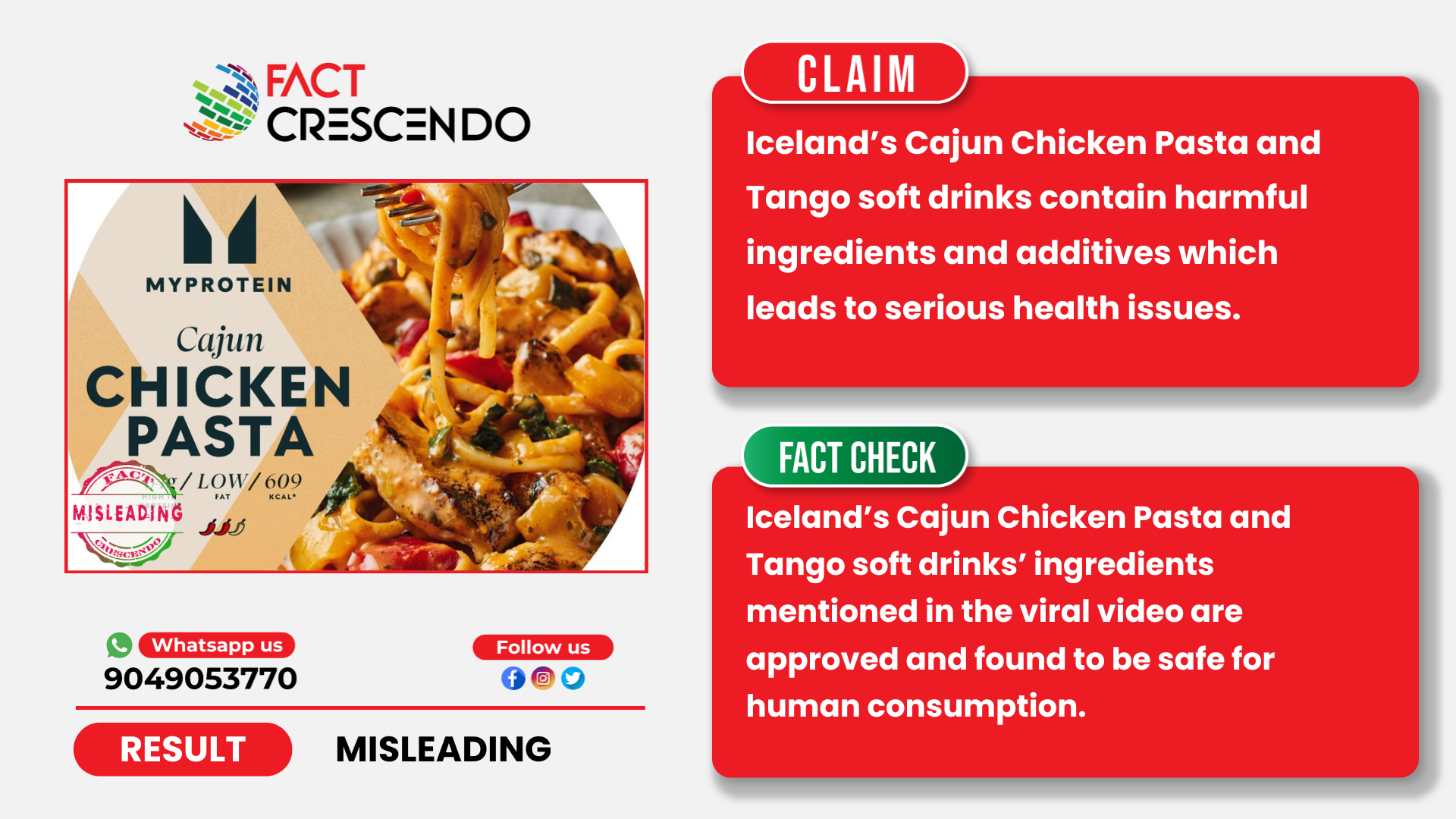
Iceland Cajun Chicken Pasta is a popular ready-to-eat dish known for its creamy sauce and bold Cajun spices. It is owned by Island Foods, a British supermarket chain founded in 1970. It began as a small store selling frozen foods. Over the decades, Iceland expanded rapidly across the UK.
However, recently the supermarket became the talk of social media after some users claimed that both Iceland Cajun Chicken Pasta and Tango soft drinks contain harmful ingredients which can lead to serious health issues to people of all ages.
The claim suggests that the product contains Sunflower oil which forms toxic aldehydes once heated. Modified starches spike blood sugar aggressively. Yeast extract contains MSG which is one of the major reasons for migraine and neural toxicity. This over-stimulates the brain and kills brain cells. Potassium chloride disrupts the heart rhythm and leads to kidney diseases.
Iceland Cajun Chicken Pasta
Sunflower Oil: EFSA explained that sunflower oil is generally safe for people, animals, and the environment when used properly. It is also used as a fungicide on vegetables. It is not toxic, does not cause health problems, and breaks down naturally without leaving harmful residues. EFSA even agreed that there are no major risks to consumers, workers, or the environment when exposed to it. However, some areas need more data for further study, but overall the oil is considered safe and suitable for use for agricultural purposes as well.
The Food and Drug Administration (FDA) includes sunflower seed oil and its triglycerides or fatty acids on its list of indirect food additives. These ingredients can be used in special coatings that might touch food by accident. The CIR Panel studied sunflower seed oil, hydrogenated sunflower seed oil, and sunflower seed acid and found these to be safe when used in cosmetics and personal care products as well.
Modified tapioca Starch: Food and Agriculture Organization (FAO) has clarified that modified tapioca starch is used to make low calorie foods. It can act like fat in foods but has fewer calories. The foods in which it is used gives a similar taste like high fat foods while having low energy content.
Potassium Chloride: Potassium chloride (KCl) is a white, odorless salt that dissolves in water and tastes salty. The U.S. Food and Drug Administration (FDA) has reviewed it and listed it as “generally recognized as safe” (GRAS) for use in foods when used according to normal good manufacturing practices. It has been approved to be used as flavor enhancer, flavoring agent, nutrient supplement, pH control agent, stabilizer, or thickener without specific limits, as long as it’s used properly.
Tango Soft Drinks
Aspartame: Aspartame is a low-calorie sweetener which tastes sweet but does not contain any natural sugars and its calorie level is much less than sugar. It is 200 times sweeter than sugar that is why it is used in very less quantity. It is an artificial substance and made of two naturally occurring amino acids called aspartic acid and phenylalanine.These two amino acids are found in various foods and in the human body as well.
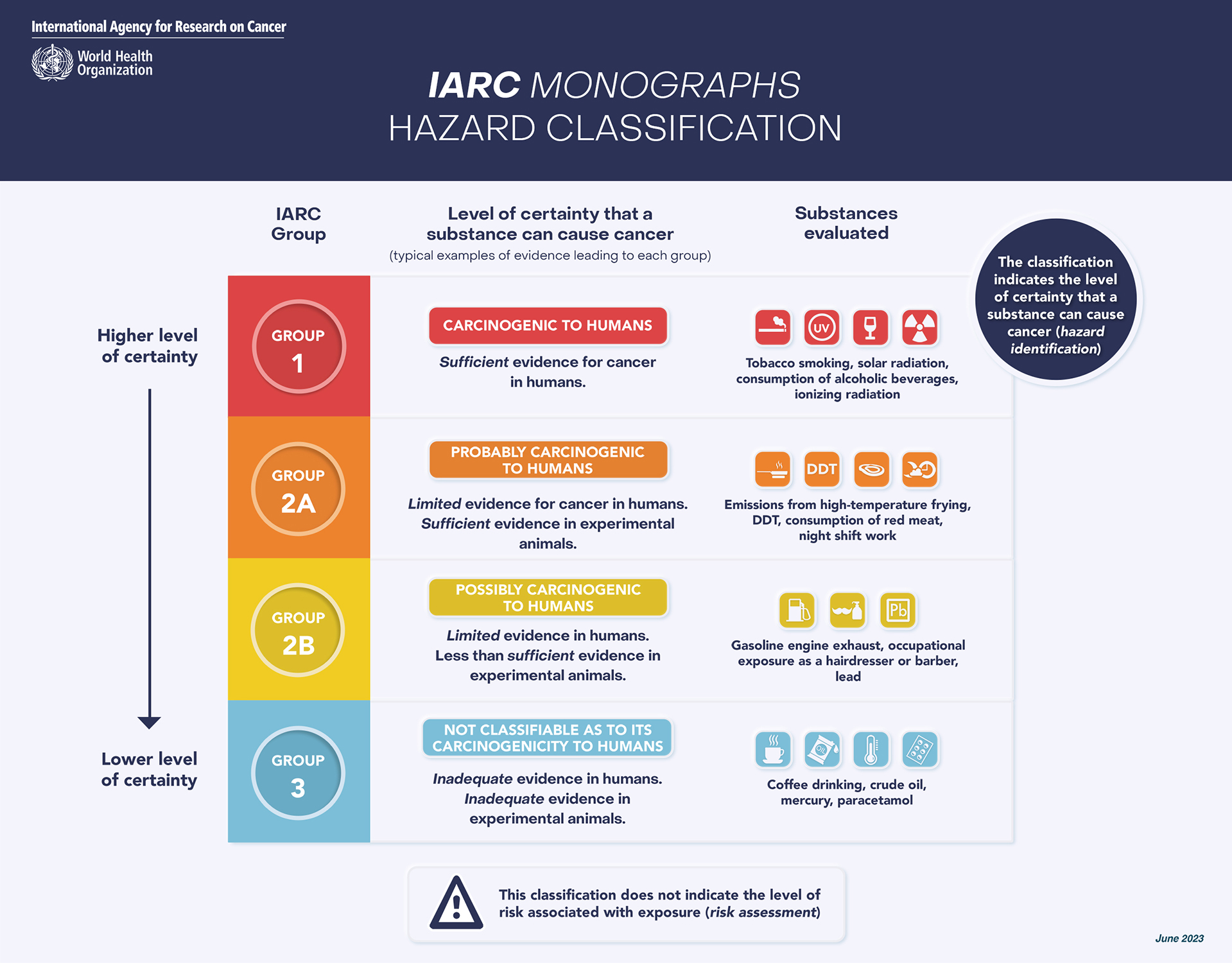
According to the World Health Organization (WHO), the International Agency for Research on Cancer (IARC) conducted a study and classified Aspartame as possibly carcinogenic to humans (Group 2B) based on limited evidence for cancer in humans. Group 2B category means possibly carcinogenic to humans. Gasoline engine exhaust, occupational exposure as hair dresser or barber etc falls under this classification.
JECFA had also concluded that there was no convincing evidence from experimental animal or human data that aspartame has adverse effects after ingestion. JECFA confirmed that aspartame is safe to consume within the daily limit of 0–40 mg per kilogram of body weight. That means, a 70 kg adult would need to drink more than 9–14 cans of diet soda in a day to go over the limit, as long as they don’t get aspartame from other foods.
Saccharin: Saccharin is a non-sugar sweetener. The European Food Safety Authority (EFSA) has reviewed the artificial sweetener saccharin and decided it is safe to eat. After looking at all scientific evidence, EFSA increased the acceptable daily intake (ADI) from 5 to 9 milligrams per kilogram of body weight. The new review of the ingredient negates the dangers of bladder tumors seen in male rats, saying it is not relevant to humans. EFSA also found that saccharin does not damage DNA and is unlikely to cause cancer in people.
Potassium Sorbate: Potassium sorbate is a chemical food additive which is used as a preservative in foods. It prevents the growth of molds, fungi and yeast. It can be found in many food products like cheese, chewing gums, processed meat, citrus fruits, wine and in personal care products etc.
According to a report, regulatory agencies such as the FDA, the United Nations Food and Agriculture Organization, and the European Food Safety Authority (EFSA) have determined that potassium sorbate is “generally regarded as safe,” (GRAS). When one eats potassium sorbate as a food additive, it passes through the system harmlessly as water and carbon dioxide. It does not accumulate in the body.
The European Food Safety Authority (EFSA) reviewed the safety of sorbic acid and its salts like potassium sorbate and calcium sorbate, which are commonly used as food preservatives in the EU. These additives were already approved under EU law and an acceptable daily intake (ADI) of 25 mg per kg of body weight per day was set. Studies showed that potassium sorbate is easily absorbed by the body and mostly broken down into carbon dioxide after digestion. Animal studies did not show harmful effects even at very high doses. No evidence suggesting that potassium sorbate damages DNA was found.
Phenylalanine: Phenylalanine is a common amino acid. The U.S. Food and Drug Administration (FDA) lists as a substance that can be added to foods. It is considered “generally recognized as safe” (GRAS) and may be used in food for enhancing flavor or as a nutrient supplement. It is naturally found in many protein-rich foods and is also part of the artificial sweetener aspartame.
According to another report, Phenylalanine is safe for healthy adults in the quantities found naturally in foods. However, individuals with phenylketonuria (Inherited Metabolic Disorder) cannot metabolize it and must minimize their intake to prevent adverse health effects.
Conclusion:
Fact Crescendo found the claim to be misleading. Iceland’s Cajun Chicken Pasta and Tango soft drinks’ ingredients mentioned in the viral video are approved and found to be safe for human consumption.
Title:Misleading information saying Iceland Cajun Chicken Pasta and Tango soft drinks are unsafe is viral. Check the facts.
Fact Check By: Siddharth SahuResult: Misleading
