

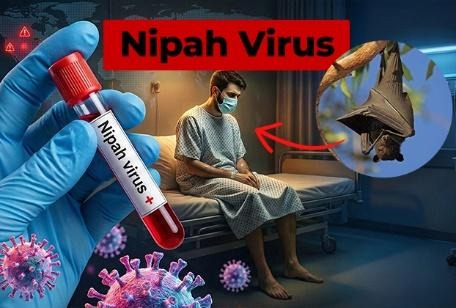
An outbreak of the Nipah virus in West Bengal has sparked widespread panic in India and South Asia. In mid-January at least five health workers in West Bengal had been infected.
President of AIIMS Bilaspur, and Chairman of India’s Covid-19 Working Group at the National Technical Advisory Group, Dr Narendra Kumar Arora said that both Kerala and West Bengal are endemic to Nipah virus.
Thailand’s health authorities have enhanced screening for passengers arriving from West Bengal. They are being checked for fever and symptoms, required to fill health forms and given advisory guidance. Nepal has also increased health checks at Kathmandu Airport and at key border crossing points with India.
Nipah is a serious, and sometimes deadly, viral disease. Around 40% to 70% of people with Nipah die. Usually the transmission needs close contact with infected animals or bodily fluids of infected people. But it can be spread from person to person as well.
What is Nipah Virus?
The Nipah virus spreads from animals to humans. Its natural hosts are fruit bats and pigs. These bats can carry the virus without getting sick themselves, but the virus can infect many other animals and people.
World Health Organization notes that the first major outbreak was recognised in 1998-99 among pig farmers in Malaysia and Singapore, where close contact with infected pigs led to several hundreds cases.
Since then, outbreaks have been reported mainly in Bangladesh and India. In India, outbreaks occurred in West Bengal in 2001 and 2007, and in Kerala multiple times since 2018.
Its Symptoms
Once infected, some do not show symptoms at all, while others can have severe illness.
According to CDC, people with Nipah usually start getting sick 4-14 days after they were infected with the virus.
Initial symptoms often start like a common viral illness, with sudden fever, headache, muscle pain, vomiting and sore throat.
After a few days, more serious symptoms can emerge. These include dizziness, drowsiness and changes in mental state.
In the most severe cases the virus affects the brain, leading to encephalitis, seizures and coma typically within one to two days after neurological signs begin.
Some people develop severe respiratory problems, including trouble breathing.
Treatment & Prevention
There is no specific medicine or vaccine for Nipah virus infection approved for general use. Treatment is supportive. This means doctors focus on relieving symptoms and providing intensive care to help the patient’s breathing, hydration and other vital functions while the immune system fights the virus.
Preventing Nipah virus infection depends mainly on reducing contact with the sources of the virus and following basic hygiene practices.
Prevention remains the most important tool against Nipah virus. Ministry of Health has issued guidelines for the public.
People should avoid eating fruits that are fallen on the ground or partially eaten by animals, as these can be contaminated by bats. Fruits should always be washed properly and, if possible, peeled before consumption.
Raw date palm juice, toddy or any sap collected in open containers should not be consumed because bats may contaminate them. Drinking boiled or chlorinated water is safer.
Animal feed and water sources should be covered to prevent contamination by bats or other animals. While handling animals or cleaning animal sheds, protective clothing like gloves and masks should be used.
Regular handwashing with soap and water is very important. Anyone in contact with an infected person should follow safety advice given by health authorities and use proper personal protection.
You should be careful and not ignore any health problems. If you have fever, headache, breathing trouble, confusion or feel unusually weak or sleepy, go to a doctor immediately. This is very important if you have been in contact with a sick person or animals.
Do not try to treat yourself at home. Inform local health workers or authorities so they can guide you and protect others. Reporting early can save lives and stop the infection from spreading to family and neighbours.

Title:Nipah Virus: What You Need to Know and How to Stay Safe
Fact Check By: Mayur DeokarResult: Insight
