

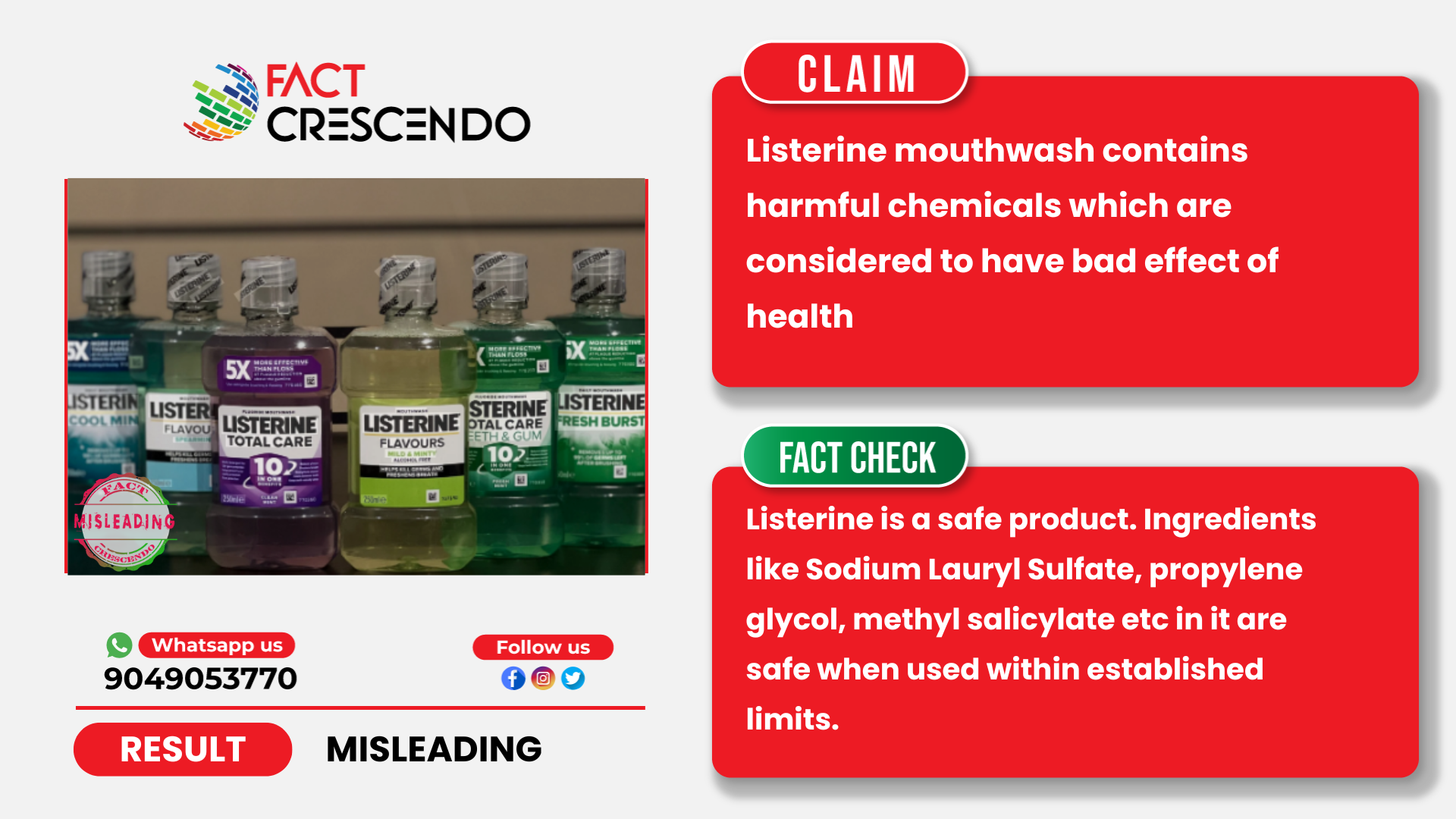
Listerine Freshburst is a mouthwash used as regular oral hygiene. It helps in reducing bacteria in the mouth and freshening breath. The product contains a blend of antiseptic ingredients commonly used in oral care products.
But recently social media users were found accusing the product of including harmful ingredients like sodium lauryl sulfate, propylene glycol, methyl salicylate, etc. The claim suggests that these ingredients are unsafe and bad for health.
Let’s check the safety of the ingredients mentioned in the post.
Sodium Lauryl Sulfate (SLS):
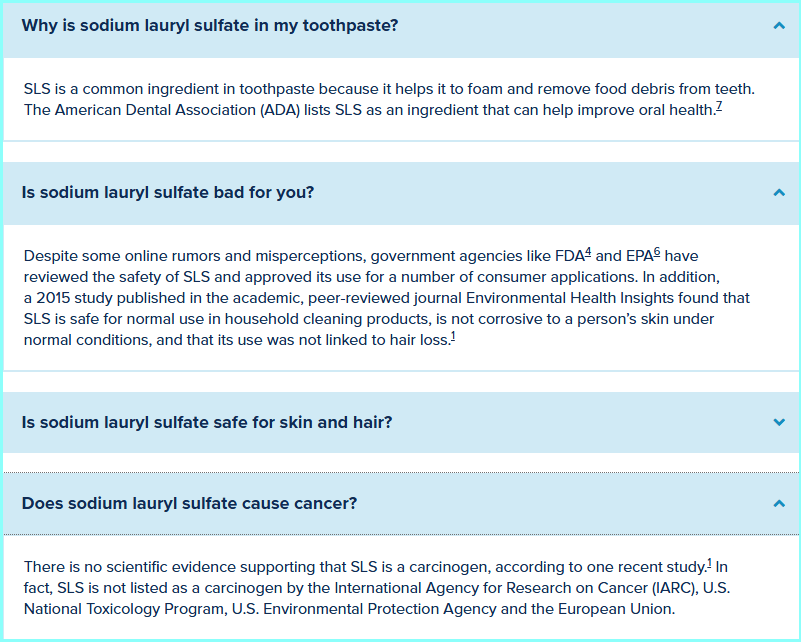
Sodium Lauryl Sulfate is used as an ingredient in many cosmetics, cleaners, toothpastes etc. It’s a very common ingredient used to create a cleansing effect. It helps in washing away plaque and other particles.
Groups like FDA and EPA studied SLS and the risk it might pose to people, especially children. It declared SLS as safe and non-carcinogen. However, people with mouth sores may find SLS toothpaste causes more irritation, so using toothpaste without SLS can help reduce pain. When used correctly, SLS is safe. The FDA considers SLS as Generally Recognized as Safe (GRAS) and allows it to be used in foods in small quantities.
FAQs on SLS can be read here.
Propylene Glycol:
As per the information available on CDC website, Propylene glycol is a synthetic liquid substance that absorbs water. It is also used to make polyester compounds, and as a base for deicing solutions. Propylene glycol is used by the chemical, food, and pharmaceutical industries as an antifreeze. The Food and Drug Administration (FDA) has classified it as an additive that is “generally recognized as safe (GRAS)” for use in food. It is used to absorb extra water and maintain moisture in certain medicines, cosmetics, or food products.
Propylene glycol has been approved for use at certain levels in food, cosmetics, and pharmaceutical products. If a person eats food products, uses cosmetics, or takes medicines that contain it, he/she will be exposed to propylene glycol, but these amounts are not generally considered harmful. People who work in industries that use propylene glycol may be exposed by touching these products or inhaling mists from spraying them.
This ingredient breaks down in the body without forming any harmful crystals. However, frequent skin exposure to propylene glycol can sometimes irritate the skin.
After a study, the National Institute of Health had mentioned that Propylene glycol in mouthwash is used as a solvent and antimicrobial. It is a common, inexpensive and non-toxic molecule. Earlier, ethyl alcohol was used in mouthwash but because of its side effects, it was replaced by propylene glycol. It is labelled as a non-active ingredient in some medical products.
Methyl Salicylate:
After study, the Scientific Committee on Consumer Safety (SCCS) concluded that methyl salicylate is safe for children when used within the recommended limits in cosmetic products. A concentration of 0.02% of this ingredient in the personal care products is considered safe for children between the ages of 0.5 to 6 years. In toothpaste, concentrations of up to 2.52% are considered safe. FDA had also listed methyl salicylate as an active ingredient in mouthwash formulations. When it is used within approved limits, there is no safety concern.
Further, we found that Listerine Freshburst mouthwash contains 0.06% of methyl salicylate along with other active ingredients like eucalyptol, methanol, thymol etc. From the above evidence we had found that Methyl Salicylate up to 2.52% is considered safe in oral products. As Listerine contains 0.06% of Methyl Salicylate, it is considered safe. However, the label of the product warns that this product should not be used by children below 12 years.
Conclusion:
Fact Crescendo found the claim to be misleading. All the ingredients in Listerine Freshburst mouthwash are approved and considered safe when used under established limits.
Title: Social Media Claims About Ingredients in Listerine Mouthwash Being Harmful are Misleading.
Fact Check By: Siddharth Sahu
Result: Misleading
