

Many households have pets, and pet food plays an important role in their care. However, misleading social media posts sometimes target major brands like Royal Canin. In this fact-check, we examine some of these misleading claims.
Social Media Posts
A viral post criticises Royal Canin dog food, claiming it uses vague ingredient labels like “dehydrated poultry protein,” “animal fats,” and “hydrolysed animal proteins” without specifying species. It also alleges the brand uses “grain splitting” to hide high maize and wheat content and includes undisclosed, potentially harmful antioxidants. The specific brand is Royal Canin—4 kg medium pack.
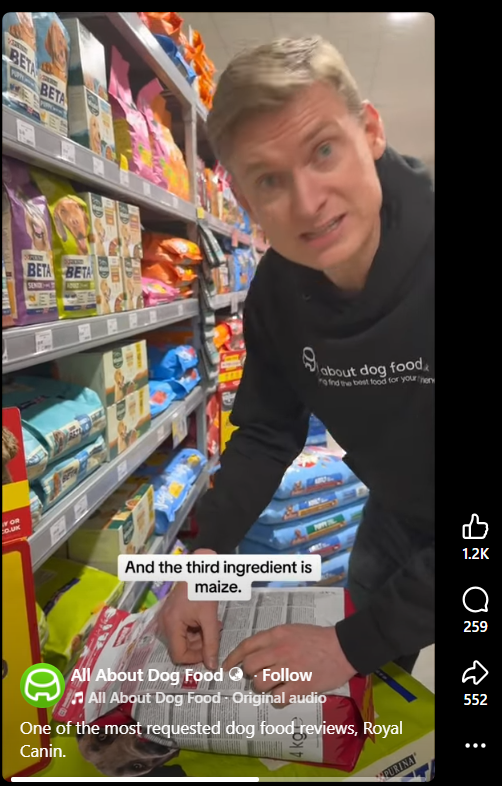
We decided to do a fact check on this.
Fact Check
Claim 1: What are the ingredients of the Royal Canin medium pack?
Dehydrated poultry proteins, wheat, maize flour, wheat flour, maize, hydrolysed animal proteins, animal fats, dehydrated pork proteins, barley, maize gluten, beet pulp, minerals, soya oil, yeast products, fish oil, yeast (source of mannan-oligosaccharides), algal oil Schizochytrium sp. More details can be read here on the Royal Canin UK website.
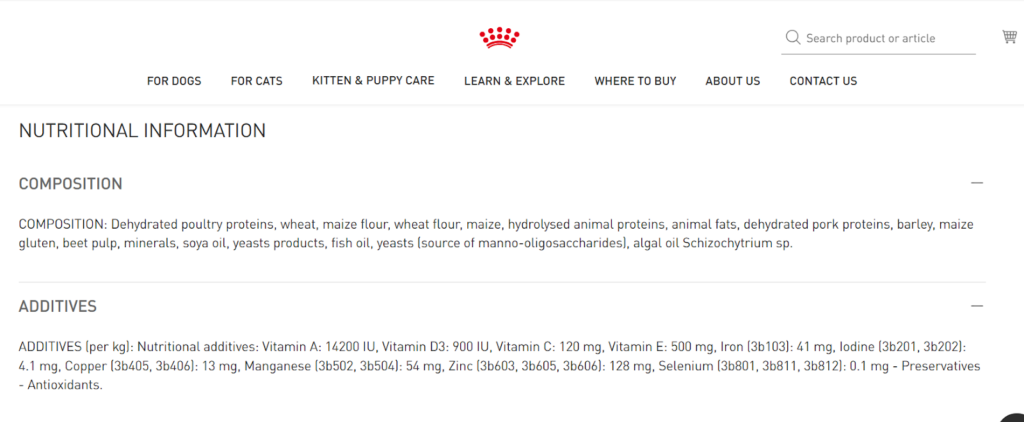
Claim 2: Does “dehydrated poultry protein” legally require species identification under pet food regulations?
In EU/UK pet food law, ingredient lists can use broad category names or specific names, but not both mixed. For example, pet foods may list “meat and animal derivatives” or name specific meats. “Dehydrated poultry protein” falls under a permitted category (poultry by-products) and does not legally require naming chicken vs. turkey. Regulators allow a general term like “poultry” when rendering mixed or unspecified poultry parts. Each ingredient must be listed in descending order by weight, but species-level detail isn’t mandated for such category terms. In practice, many European pet foods use “poultry protein” instead of specifying the exact birds. More details can be read here.
Claim 3: What do “animal fats” or “hydrolysed animal proteins” actually mean in veterinary nutrition?
“Animal fats” in pet food are typically Category 3 animal by-product fats from healthy animals, used as an energy and essential-fatty-acid source. They come from carcass trimmings rendered into fat; EU law strictly regulates them. Only fats from animals fit for human consumption are allowed, and Category 1/2 fats are banned. These fats are nutritionally valuable and not inherently harmful. More details can be read here.
“Hydrolysed animal protein” means the protein has been broken down (hydrolysed) into very small peptides or amino acids. This is common in veterinary “hypoallergenic” diets. Hydrolysis reduces allergenic potential: for example, most hydrolysed diets aim for ≥70–90% of peptides <3 kDa. In other words, the protein is “pre-digested” to be easier on digestion and to avoid triggering immune reactions in dogs with food allergies. These are well-studied, and EFSA recognises BHA and BHT, common antioxidants, as safe at regulated levels for dogs. No law requires more detail on “animal fats” or “hydrolysed proteins” beyond the category names on the label.
Claim 4: Is “grain splitting” a deceptive practice or a standard formulation method?
“Grain splitting” refers to listing the same base ingredient multiple ways, like “maize,” “maize gluten,” “maize flour,” etc., so that each entry appears lower on the list. This tactic is legal but often considered misleading.
Under EU/UK rules, all ingredients must be truthfully named and listed by weight, but manufacturers may split ingredients if each listing is accurate. For example, one dog food list might show “potato” and later “potato flour”; this pushes total potato further down the list. Such splitting can disguise that those grains are a major part of the recipe. Read here.
Therefore, it is not a banned practice—each name is technically correct—but it is a known marketing trick. In summary, “grain splitting” is a standard (albeit controversial) label tactic, not an illegal adulteration.
Claim 5: Does the lack of percentage disclosure mean ingredients are being hidden?
Pet food labels are not required to give the percentage of every ingredient unless certain claims are made. EU/UK law does require a minimum percentage if the label highlights an ingredient; for instance, “with chicken” triggers a “4% chicken” declaration. But for a standard ingredient list without such claims, percentages are generally omitted. The presence or absence of percentage figures on a kibble bag is normal business practice and not evidence that ingredients are being hidden. In fact, one FEDIAF (industry) guide explains that composition is listed by weight without percentage values.
Thus, an unlabeled list item could still be a large portion of the recipe; its ranking is what matters. The “lack of percentages” criticism arises from misunderstanding: it reflects labeling rules, not secret ingredients.
Claim 6: Are maize and wheat harmful for dogs, or are they approved carbohydrate sources ?
Corn (maize) and wheat are approved and widely used carbohydrate sources in dog foods. According to FEDIAF (the European pet food industry association), cereals like corn, rice, wheat, barley, and oats are “good sources of carbohydrates” and provide energy and key nutrients like thiamine and niacin. They also supply fiber (and may include added sources like beetroot pulp for gut health). There is no scientific basis for the idea that normal amounts of these grains are harmful to dogs.
Only a very small minority of dogs have true grain allergies or intolerances. Even then, the sensitivity is usually to a specific grain or protein, not an inherent toxicity. A FEDIAF fact sheet notes that while some pets can be allergic to one grain, this doesn’t mean other grains are bad or that grains are inherently unhealthy . In fact, allergy prevalence in dogs is low (~1–2%) . For most healthy dogs, maize and wheat in moderate amounts are perfectly safe and nutritionally useful.
Claim 7: Are these ingredients scientifically linked to proven health problems in dogs?
None of the above ingredients is inherently disease-causing in dogs. Pet food safety is strictly regulated, and approved ingredients/additives have been vetted by authorities. Claims that Royal Canin’s listed ingredients—like poultry protein, animal fats, grains, antioxidants, etc.—are proven to harm dogs are not supported by science. For example, the EFSA feed-additive panel explicitly found no consumer safety concern from BHA at its approved use level in dog food. Grain ingredients are only problematic for the few dogs with specific allergies; broad epidemiological data do not link grains with illness in the general pet population. Read here and here. Overfeeding or unbalanced diets with excess fat, salt, or calories can cause obesity or disease—but that is unrelated to the terminology used on the label.
In short, standard veterinary nutrition recognises these ingredients as normal, safe components of dog diets. Well-conducted studies tie protein sources like beef, chicken, fish, and dairy to most food allergies—not grains or “animal proteins” generically. No credible research shows that “dehydrated poultry protein” or category-named fats cause novel ailments.
Conclusion:
According to European food guidelines and regulations and health evidence, Royal Canin’s listed ingredients are safe to give your pets. Umbrella terms like “poultry proteins,” “animal fats,” and “yeast products” are not used to hide ingredients, the way these terms are used matches EU/UK regulations. Ingredients like maize and wheat are not harmful to your pets, as per research, and there is no need to have unnecessary fear of them. Percentages of some ingredients are not disclosed, but it’s not mandatory to declare those, and it’s not usually considered hiding nutritional facts as per EU/UK regulations.
Title:Is Royal Canin Hiding Ingredients? A Fact-Check on Grain Splitting, Animal Proteins, and “Undisclosed Additives
Fact Check By: Rashmitha DiwyanjaleeResult: Misleading
