
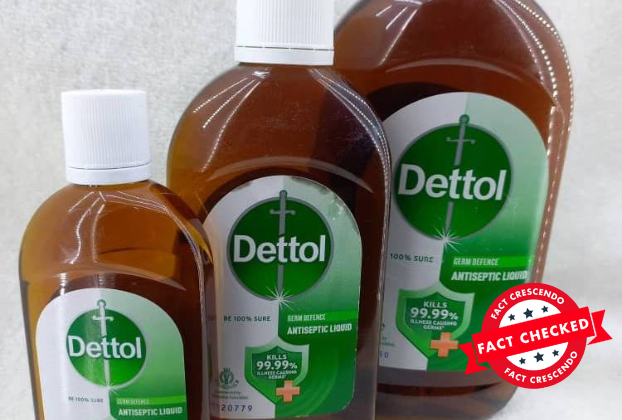
In social media, people are discussing about various issues related to health and wellbeing. Sometimes, the topics they discuss related to major consumer brands like Dettol. In this fact check, we delve into some misleading claims about Dettol.
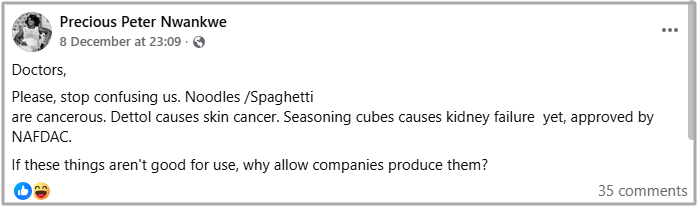
Social Media Post
Social media post in Nigeria says, Dettol causing to skin cancer with few other claims. In this fact check we are considering over the Dettol related claim only.
Fact Check
Which Dettol product the claim targets?
“Dettol” commonly refers to Reckitt’s antiseptic solutions and soaps. For example, Dettol Antiseptic Liquid is ~4.8% chloroxylenol by weight and it’s the active substance, with other ingredients: Pine Oil, Isopropyl Alcohol and Caustic Soda Solution, Castor Oil, Caramel and Water.
Do any long-term or occupational exposure studies link chloroxylenol use with higher skin-cancer rates.?
Chloroxylenol is not genotoxic and has shown no evidence of causing cancer in animal studies. A 2016 human risk assessment of chloroxylenol in soaps concluded “lack of genotoxicity, no evidence of carcinogenicity” and found no cancer increase even at high doses. The US EPA’s assessment likewise noted chloroxylenol “is not mutagenic” and that no chronic toxicity concerns (such as carcinogenicity) were identified aside from eye irritation. In short, modern reviews find no credible link between chloroxylenol exposure and cancer.
What do health authorities and regulators (such as NAFDAC, WHO, and product safety agencies) say about Dettol’s safety?
International hazard classifications do not treat Dettol as a proven carcinogen. For instance, a regulatory SDS (safety data sheet) for Dettol Antiseptic Liquid explicitly states under “Carcinogenicity: No known significant effects or critical hazards” and similarly “no known significant effects” for mutagenicity and reproductive toxicity . In one US SDS,“classification criteria are not met” for carcinogenicity. (Some databases note chloroxylenol is IARC Group 2B “suspected” by precaution, but also acknowledge other sources do not consider it carcinogenic . Crucially, IARC 2B simply means “possibly carcinogenic” in the absence of definitive data; it is not proof of harm.) Global agencies like WHO continue to list chloroxylenol antiseptics as safe for use (it is on WHO’s Essential Medicines list as a 4.8% topical disinfectant and this is the concentration of chloroxylenol of the Dettol too ). Nigeria’s NAFDAC has approved Dettol products (see the NAFDAC Green Book listing chloroxylenol in Dettol) and has never issued any warning linking Dettol to cancer.
Can repeated or improper use of Dettol cause skin irritation, burns, or long-term skin damage — and is that being confused with “cancer”?
Misuse of Dettol can irritate or burn skin, which may cause redness or injury – but this is an acute chemical effect, not cancer. Reputed sources warn “discontinue use if rash or irritation occurs” and advise diluting Dettol before applying. People sometimes confuse harsh skin reactions with “toxicity,” but irritation (contact dermatitis, burns) is well documented and expected if used wrongly. It does not indicate cancer. In fact, Dettol exposure has no known mechanism to cause the DNA damage needed for cancer. For example, one rabbit study cited in a safety review reported only irritation at very high concentrations. Dermatology experts generally discourage using strong disinfectants like Dettol on wounds or inflamed skin (because of delayed healing or burns), but this advice is about irritation, not about any cancer risk.
Is there any cancer related known cases due to usage of Dettol?
All reported Dettol-related health incidents have been acute poisonings or burns (usually from swallowing or direct contact), not chronic diseases. Case reports (e.g., from Hong Kong) describe stomach irritation, vomiting, or aspiration from ingestion of Dettol. These are short-term toxic injuries; none report long-term cancer. Likewise, the global “Dettol ingestion” hoax (claims of mass death by drinking Dettol to prevent COVID) was debunked by police and health officials in 2020. No credible case of Dettol-induced cancer is known.
Are counterfeit “Dettol” products causing rashes or burns are being retold online as “cancer” stories?
Importantly, some online anecdotes of “Dettol skin problems” involve counterfeit or adulterated products. Nigeria’s authorities have warned repeatedly about fake “Dettol” soaps causing rashes. For example, NAFDAC confirmed that a “Dettol Health Fresh Soap” sold in Nigerian markets was counterfeit and had caused skin irritation . Such cases illustrate that non-genuine products (or improper formulations) can harm skin – but this says nothing about the real Dettol brand. The viral post may be conflating these issues or recycling old rumors. Legitimate Dettol has a long track record of safe use when instructions are followed.
Conclusion
There is no scientific or regulatory basis for the claim that Dettol causes skin cancer. Independent risk assessments, regulatory data sheets and health agencies all describe Dettol’s hazards in terms of irritation and poisoning, and they find no carcinogenic risk. Consumers should follow label directions (dilute Dettol for skin use, avoid contact with eyes and mouth) and be wary of fake products. But the cancer warning in the viral post is unfounded according to all available evidence.